
Facebook-f Twitter Youtube

Main Office Number: 1-877-390-6377

National Referral Number: 1-888-314-6075

Not sure which casino to choose?

OnlineCasinoLabs compares the top-rated online casinos available to Canadian players, covering everything from RTP rates to withdrawal speeds.

Referral Form
  • Aid & Attendance
    • Surviving Spouses
    • Veterans’ Stories
  • VetAssist®
    • Check Your Eligibility for the VetAssist Program
    • 0% Loan
    • Enhanced Care Plan Services
      • VetAssist Companion
    • FAQ
  • About
    • Leadership
    • Testimonials
    • News
    • Events
    • Press Release
  • Partners
    • Geriatric Social Workers & Case Managers
    • The Provider Opportunity
    • Testimonials from VetAssist Partners
    • Webinar Series
    • Regional Contacts
  • Blog
  • Careers
  • Contact
  • Referral Form
Menu
  • Aid & Attendance
    • Surviving Spouses
    • Veterans’ Stories
  • VetAssist®
    • Check Your Eligibility for the VetAssist Program
    • 0% Loan
    • Enhanced Care Plan Services
      • VetAssist Companion
    • FAQ
  • About
    • Leadership
    • Testimonials
    • News
    • Events
    • Press Release
  • Partners
    • Geriatric Social Workers & Case Managers
    • The Provider Opportunity
    • Testimonials from VetAssist Partners
    • Webinar Series
    • Regional Contacts
  • Blog
  • Careers
  • Contact
  • Referral Form
Home / How to Improve Quality of Life for Elderly Loved Ones Aging at Home

How to Improve Quality of Life for Elderly Loved Ones Aging at Home

We’ll be performing system updates Wednesday evening, August 27st from 9:30 PM to 11:30 PM CT. The website may be temporarily unavailable at times during this period. We are sorry for any inconvenience.

How to Improve Quality of Life for Elderly Loved Ones Aging at Home

December 18, 2024
Written by
Lauren Pitlyk

quality of life for the elderly

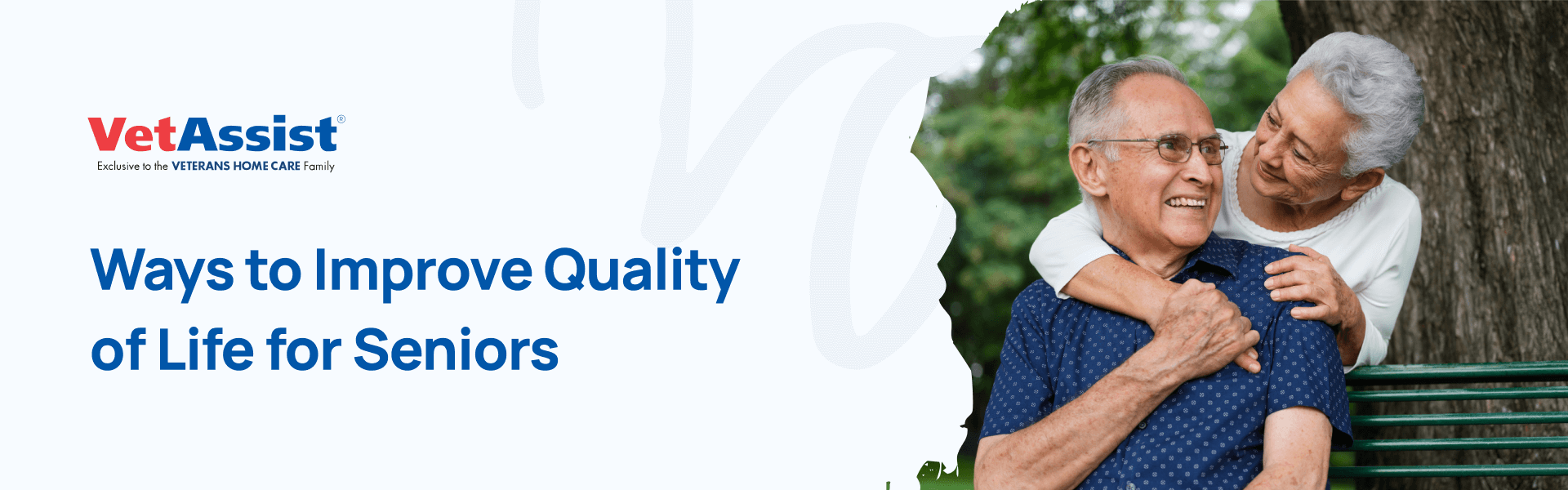
As our parents, grandparents, and other loved ones age, we may start to question how we can help them live well -- not just safely, but with genuine comfort, purpose, and connection. Quality of life for elderly individuals at home is a multifaceted goal, and it begins with understanding what matters most: physical and emotional wellness, a sense of purpose, and personal safety.

The following tips to improve quality of life are offered specifically for those whose senior loved one is aging in place. For veterans and their families, professional in-home care -- supported by VA benefits -- can play a powerful role in all three of these areas.

Physical Health Tips to Enhance Quality of Life for Aging Seniors

Managing Chronic Conditions With the Right Medical Team

Much of quality of life in the elderly population is tied to physical health. For seniors managing chronic conditions, a trusted doctor and medical team is integral. Geriatricians and gerontologists specialize in treating older patients and are able to provide experienced, patient-centered care. Your loved one may find these professionals to be more encouraging, compassionate, and knowledgeable about their stage of life. If your loved one is not managing a chronic condition, encourage regular check-ups and prompt attention to any new health developments, however minor.

Exercise and Physical Activity

Preventative health is critically important for enhancing elder quality of life. In addition to boosting immunity, sleep quality, and blood pressure, physical exercise provides significant mental health benefits. Regular exercise does not need to be strenuous -- it should be enjoyable enough that your loved one will make it a habit. Stretching, yoga, tai chi, regular walks, and pool- or chair-based aerobics are all popular choices.

Speak with your loved one's doctor before beginning any new regimen. You might also consider the help of a physical therapist -- they are not just for post-injury recovery, but can help develop a safe, personalized routine to increase strength, balance, and flexibility -- reducing aches and pains and preventing falls.

Nutrition and Healthy Eating

Nutrition is another vital factor in quality of life for the elderly. Balanced meals -- and, where recommended, supplements -- provide the nutrients needed to maintain muscle mass, bone density, and healthy cholesterol levels. Good nutrition is essential for managing conditions like type 2 diabetes and reducing the risk of stroke.

Personal Care, Hygiene, and Comfort

Additional elder care considerations include assistance with bathing when needed, and regular grooming such as nail care, shaving, hair care, and moisturizing. Well-fitting, comfortable clothing and footwear appropriate to the season make a meaningful difference in daily comfort. Ensure their bed is supportive and not contributing to back pain or poor sleep.

Finally, address hearing loss, vision loss, or reduced mobility with appropriate assistive devices. Unaddressed sensory and mobility impairments are among the most significant -- and most correctable -- quality-of-life factors for elderly individuals living at home.

Home Safety Tips for Seniors Aging in Place

Aging in place is a popular choice among seniors because of their ability to maintain their independence and agency, along with the comfort of familiar surroundings and routines. For family members who worry about their loved one's safety, there is much that can be done to make their home safer and more comfortable.

Begin with a thorough audit of risks around the home: electronics cords that can be secured against walls, wobbly furniture, dimly lit hallways or stairs, slippery floors, and potential fire hazards. Add bathroom railings and move frequently used kitchen items to accessible shelves. Find a more detailed room-by-room home safety checklist here. An occupational therapist is an excellent resource -- they can optimize everyday tasks for safety and provide ideas for organization and adaptive signage.

Voice-activated technology such as SmartCompanion provides an easy way to call for help, make social calls, and receive automated reminders for medications or household tasks. Doorbell cameras let your loved one see who is outside right on a screen. For veterans managing mobility challenges or early cognitive decline, these technologies are especially valuable -- reducing accidents and increasing confidence in living independently at home.

For added comfort, consider climate control, humidifiers, throw blankets, and light timers. Also plan ahead for home maintenance needs -- pest control, landscaping, chimney sweeping -- so your loved one is never in a risky situation.

Some seniors are resistant to accepting help. Approach these conversations ready to listen, and let your loved one collaborate on solutions. Their comfort with the process matters as much as the outcome.

Mental Wellness and Social Connection: Combating Senior Isolation

A side of aging and quality of life that is receiving increasing attention is the often diminished opportunity to simply be part of things. New physical limitations can result in loss of driving ability or decreased stamina. Leaving the workforce means the loss of daily interactions with colleagues. Days can become quieter and lonelier -- increasing the risk of depression, cognitive decline, and a diminishing sense of personal purpose.

Social isolation in elderly individuals presents a real and serious threat to mental health and cognitive function. It also negatively impacts physical health and longevity. It is quite literally vital that seniors have regular, meaningful opportunities to gather with others -- sharing conversation, hobbies, meals, and activities.

Family Connection and Community Involvement

Families can include their elderly loved ones in celebrations and find ways to make these occasions meaningful. Regular dinners together can be a bright spot in quieter weeks, and families who live far from an aging parent can maintain meaningful connection through regular phone or video calls.

Senior centers offer field trips, group exercise, and crafts. A house of worship can provide similar community and often coordinates volunteerism -- giving a meaningful sense of contribution. Encourage your loved one to pursue the activities they love and help them find communities where they can share these interests with others.

Mental Health Considerations for Veteran Seniors

For aging veterans, mental wellness carries additional dimensions that deserve specific attention. Veterans may live with the long-term effects of service-related experiences -- including PTSD, chronic pain, or traumatic brain injury -- that can intensify feelings of isolation and depression in later life. The VA offers mental health services specifically for veterans, including the VA Caregiver Support Program, which provides resources for family members supporting a veteran at home.

In-home care from a professional caregiver can also provide meaningful social connection for a veteran who is no longer easily able to leave the house. A consistent, trusted caregiver is not just a practical support -- they are often a primary social contact for isolated seniors, and their presence significantly improves mental health outcomes.

How VA Home Care Benefits Support Quality of Life for Veteran Seniors

For veteran families, the goal of improving quality of life at home is not just aspirational, it can be directly supported by VA benefits that many families do not know exist.

VA Aid and Attendance: Home Care as a Quality-of-Life Benefit

The VA Pension with Aid and Attendance benefit is a tax-free monthly payment available to wartime veterans and surviving spouses who need help with activities of daily living. What many families do not realize is that this benefit is specifically designed to fund in-home care -- meaning it directly pays for the support that improves physical health, daily safety, social connection, and personal dignity for seniors living at home.

Professional in-home caregivers funded through Aid and Attendance can provide:

  • Personal care assistance: bathing, grooming, dressing, and mobility support
  • Medication management support: reminders, organization, and adherence monitoring
  • Meal preparation and nutrition support: ensuring balanced daily nutrition
  • Companionship and social engagement: reducing isolation and supporting mental wellness
  • Home safety monitoring: a professional presence that can identify and respond to emerging risks

The VetAssist Program: Fast, No-Cost Access to Home Care

Veterans Home Care's VetAssist Program helps qualifying veterans and surviving spouses access Aid and Attendance-funded home care -- typically within 30 to 45 days of application, compared to a year or more through direct VA processing. There is no upfront cost and no obligation to apply. The VetAssist Program also provides a 0% interest loan to bridge the cost of care during the benefits approval period, so your loved one never has to wait.

Check your loved one's eligibility for the VetAssist Program today -- it takes just a few minutes.

Start Improving Your Veteran Loved One's Quality of Life at Home Today

Improving quality of life for elderly loved ones at home is one of the most meaningful investments a family can make. It begins with the right combination of physical care, a safe home environment, meaningful social connection, and access to support that reduces the burden on the family caregiver.

For veteran families, that support system may already be available through VA benefits -- at little or no cost. Veterans Home Care has helped more than 22,000 veterans and surviving spouses access professional in-home care through the VetAssist Program, and we make the process as simple as possible.

Ready to help your veteran loved one live better at home? Check eligibility for the VetAssist Program today, or call (888) 314-6075. We will help you find out whether VA benefits can cover professional home care -- and get your loved one the support they deserve.

Contact Us

National Headquarters:

11975 Westline Industrial Drive, St. Louis, Missouri 63146

Phone Number: 877-390-6377

Free Consultation and Referrals:

1-888-314-6075

Fax Referrals:

1-800-640-7988

Follow Us

CHECK YOUR ELIGIBILITY
Free service for yourself and or loved one

  • This field is for validation purposes and should be left unchanged.

Or Call 1-888-314-6075

The VetAssist® Program is offered exclusively by the Veterans Home Care® family of companies.

Veterans Home Care® and the VetAssist® Program are not part of any government agency and are not affiliated with the Department of Veterans Affairs (VA).

National Association for Home Care and Hospice member logo
Independent Home Care Alliance logo
Home Care Association of America logo
National Aging in Place Council member logo

Aid & Attendance

Surviving Spouses

VetAssist® Program

GovAssist

FAQ

Partners

Privacy

Contact

News

Careers

FOLLOW US

Facebook-f Twitter Youtube Linkedin-in
BBB Accredited Business Award Logo

Veterans Home Care, LLC | Veterans Home Care of California, LLC | Veterans Home Care NYJ, LLC | Veterans Home Care of Texas, LLC | VetAssist, LLC | VetAssist Atlantic, LLC | VetAssist Central, LLC | VetAssist Nevada, LLC | VetAssist Pacific, LLC | VetAssist West, LLC

Check Your Eligibility

Check Your Eligibility

  • This field is for validation purposes and should be left unchanged.
  • Aid & Attendance
    • Surviving Spouses
    • Veterans’ Stories
  • VetAssist®
    • Check Your Eligibility for the VetAssist Program
    • 0% Loan
    • Enhanced Care Plan Services
      • VetAssist Companion
    • FAQ
  • About
    • Leadership
    • Testimonials
    • News
    • Events
    • Press Release
  • Partners
    • Geriatric Social Workers & Case Managers
    • The Provider Opportunity
    • Testimonials from VetAssist Partners
    • Webinar Series
    • Regional Contacts
  • Blog
  • Careers
  • Contact
  • Referral Form

Saul Avila, SetxHomeCare

“VetAssist is a great service. There are benefits and services available that veterans don’t know about. Nurses and social workers dont’t know about them either, so it’s great to educate the community. The veterans can get services at home, and that’s where they want to be: in their homes.

How long have you been working with VetAssist

“7 years”

What’s your experience working with VetAssist?

“I started with the local Regional Manager. He was a huge help getting this going – the process of helping patients get their documents together, everything they need to get approval. “

What do you thing about the service?

“It’s great! It’s really needed in the community, because if the veterans were to apply for the benefits on their own, they are looking at a year process. We can start services usually within 30-45 days of everything being submitted. They’re able to stay in their own homes longer and get the help they need. “

What has been your experience helping veterans?

“It’s been a honor. They do not want to ask for anything. They want to do it on their own. When we reach out and tell them what’s available, they are very greatful. It means that a lot to me to be able to get it started for them, to make it easier on them. It’s a lot of paperwork.”

Cindy Stamps, AccentCare in Waco, Texas
with VHC Regional Manager, Nicole Figureo

“I’m a daughter, aunt, niece, and cousin of veteran, I did my research among companies similar services before I started working with VetAssist. I have exclusively worked with VetAssist for my veteras for three years.”

How long have you been working with VetAssist

“Exclusively for 3 years; did her research among companies with similar services”

What’s your experience working with Nicole?

“3 years. Also has a private pay; was doing her referrals, got a call from a girl with a strong NY accent looking for Marlena.”

What do you thing about the service?

“I love it because it’s easy to get in contact. They do what they say they’re gonna do. If there’s a mistake or miscommunication, they own up to whatever the problem is and do whatever they can to get it fixed. I have a Robin’s personal cell, David’s personal cel… They take the time to talk to me. I’ve been having problems with portal. It’s nice to know that if I have a question I will get it answered right away.I’m not patient when it comes to my veterans. “

What has been your experience helping veterans?

“It’s amazing. The VA do the veterans justice, and they are even less accomodating to the spouses. To know that I am able to help somebody to get the benefit and the care that they need to stay in their home is satisfying. I had to talk to a veteran the other day about his wife, and they do not qualify for the benefits because he’s already 100 % disabled. It breaks my heart because here are these men and women who served our country, and I can’t help them.”

“In central TX, we have a couple other agencies – I do not know how they are getting away with it – they are charging veterans $1200-1500 up front without a quarantee that they can get them benefits. The veterans reach out to me later and many tell me they do not qualify, and I say, how do you know you do not qualify?” I am often able to help them trough my VetAssist contact”

“I’m so thankful for Bonnie starting this company. I am very particular with my veterans, and I am gratefull that you guys are around, because you help me help my veterans.”

[video_lightbox_youtube video_id=”naT6xkMIvCs” width=”640″ height=”480″ anchor=”click here to open YouTube video” auto_thumb=”1″]

Robin Borders

Vice President, Sales

With more than a decade of senior care experience, Robin Borders is a respected leader in the home care industry.

Robin started at Veterans Home Care in 2012 in the Client Services Department, then joined the marketing team as a regional manager and was promoted to territory vice president. As a client service specialist, Robin monitored the home care of clients assuring they were getting the services they needed from a home care aide they trusted. Working as a regional manager, Robin made home visits to veterans and their families explaining the VetAssist Program.

Robin is instrumental in marketing our unique business model, educating the public on how we help people apply for a VA pension with Aid and Attendance and provide home care services. As a territory manager, Robin works with home care agencies and senior organizations across the country.

Prior to working at Veterans Home Care, Robin owned her own business as a manufacturer’s representative of restaurant equipment managing four states. Robin, a daughter of a Marine Korean War veteran and granddaughter of a Navy WWII veteran, grew up in St. Louis, Missouri and graduated with an associate degree from Florissant Valley Community College. Robin volunteers for the Alzheimer’s Association and is a member of the St. Louis Home Care Alliance.

Robin is a sought-after speaker and presenter based at our St. Louis, Missouri headquarters and oversees regional managers and company growth in 48 states

Howard Laiderman

Chairman

Howard began his career in his family’s automotive tire and auto parts wholesale and retail business which at one time was ranked 8th largest US tire dealer by Crane Publishing. He developed his skills in operations and executed marketing programs that resulted in sales from Fortune 500 companies including Walmart.

After the passing of Howard’s father, he ventured out on his own and started Ness Trading Company. With the help of his wife Bonnie and their two daughters, his new family operation quickly grew to one of the largest closeout and surplus specialists in the automotive parts and custom wheels industry.

Since 2003, Howard has worked with Bonnie growing Veterans Home Care to become the largest company of its kind offering in-home care to our deserving veterans through the unique VetAssist Program. Howard has been an integral part of the organization’s effort to brand the VetAssist Program and scale the business through provider contracting and client relationship management (CRM) technology.

Today Veterans Home Care has multiple locations throughout the country, and serves veterans in 48 states with a network of more than 4,000 home care providers. Veterans Home Care has also earned the Better Business Bureau’s Torch Award for Ethics and the Inc. 5000 Award of Fastest Growing Companies seven times.

Howard supports national veterans’ organizations and travels to Capitol Hill advocating for veterans and educating policymakers about the needs of veterans.

Bonnie Laiderman

Founder and Chairwoman Emeritus

As the founder and owner of Veterans Home Care®, Bonnie Laiderman has helped more than 20,000 veterans and their spouses receive in-home care through the unique VetAssist® Program.

Bonnie started the business in 2003 to answer a need in the military veteran community. Many veterans and their families don’t utilize available benefits from the Department of Veterans Affairs (VA) due to a lack of awareness. As a caregiver for her late mother, Bonnie personally experienced the frustration of failing to access available VA benefits in her mother’s time of need.

Bonnie has overseen the growth of the company from a one-woman operation to become one of the largest women-owned companies in the St. Louis Metro Region with multiple locations throughout the country, serving veterans in 48 states with a network of more than 4,000 home care providers.

Veterans Home Care has also earned the Better Business Bureau’s Torch Award for Ethics and the Inc. 5000 Award of Fastest Growing Companies seven times.

Bonnie personally has been recognized with numerous awards including the:

  • KTVI-Fox2 News Most Remarkable Women
  • McKnight’s News Publications’ Hall of Honor
  • Missouri Athletic Club’s Women of Distinction
  • St. Louis Business Journal’s Most Influential Women
  • Ingrams Magazine’s 50 People You Should Know and
  • Missouri Council for In-Home Service’s

In addition to growing Veterans Home Care to become the largest provider of its kind in the industry, Bonnie has been a strong supporter of numerous charitable and social organizations with both a local and national impact. Wings of Hope and Lydia’s House have both benefited from Bonnie’s support to continue services to our most vulnerable in need. Bonnie also is active in the American Red Cross as: a Tiffany Circle member, (a national society of women leaders), a chairperson for the Service Armed Forces Committee and a mentor in the Society of Women Leaders.

Carmen Perry-Tevaga

Vice President, Strategic Partnerships

As Vice President of National Accounts, Carmen develops and supports a nationwide network of home care and other senior care providers for Veterans Home Care’s brands. Carmen is responsible for these valued stakeholder relationships, identifying sales opportunities and developing comprehensive growth strategies for all parties involved.

Carmen’s 20+ years of healthcare administration experience spans multiple levels of care from physician practices to renown hospitals and rehabilitation services.

Having an extensive consulting background and subject matter expertise in VA Aid and Attendance benefits for older adult care, she’s a well-received speaker, podcast guest and presenter.

Carmen serves on the Home Care Association of America’s (HCAOA) Veterans Affairs Committee and serves as a board member for the National Aging In Place Council, (NAIPC) with whom she co-wrote a book on senior care.

Donna Appel

Vice President, Marketing

In her role as Vice President, Marketing, Donna oversees VHC’s marketing outreach and branding. Donna has more than 35 years of experience in sales, sales training and marketing.

Her wealth of business expertise includes a focus on the needs of older adults, caregivers and family members in need of home care solutions. She’s a resource to veterans’ organizations and senior care providers across the country and champions the mission to assist veterans, their spouses and their families with resources for them to age in place.

Those resources include the VetAssist® Program, which helps deserving veterans stay at home, if it is their choice, by obtaining home care with no out of pocket cost. As a daughter (and daughter-in-law) of a WWII veteran and a Veterans Home Care client, Donna is proud to serve these heroes and their families.

Donna is a member of the Veterans Council of Broward County and is currently on the Advisory Council for the Aging and Disability Resource Center of Broward County. Ms. Appel also mentors at risk teenagers through Take Stock in Children, an organization that funds college scholarships for at risk youth. Donna is part of a team for the Stepp’n Up Shoe Project that collects new shoes for Broward County children and distributes them to The Children’s Home Society, Child Net, Kids in Distress, The Anne Stork Center and several other organizations.

Marcy Seeney

Senior Vice President of VetAssist

Marcy Seeney, a dedicated advocate for senior care, has been an integral part of Veterans Home Care since January 2006. With a wealth of experience in the industry, Marcy was among the pioneering team members who joined her family on the company’s mission to support Veterans and Surviving Spouses in accessing essential care while maintaining their independence and dignity at home.

Over her remarkable 17-year journey, they have positively impacted over 22,000 families by facilitating their eligibility for the Aid & Attendance pension. Marcy is passionate about serving others and ensuring their well-being. Marcy continues to make a difference through her unwavering commitment to excellence in senior care. Networking in this space, she led the way for St. Louis and helped teach and train those who have gone on in the community to careers in home care.

Evan Kaltman

Chief Revenue Officer

Since opening the local Veterans Home Care NYJ office in 2009, Evan has overseen the expansion of the operations to include all of New Jersey as well as Pennsylvania, New York and Delaware. Evan is based at our Cedar Knolls, New Jersey office and leads sales operations nationwide.

Evan is a member of the New Jersey Association of Veterans Service Officers (NJAVSO). In addition, he serves as a board member for Welcome Home Vets of NJ.

Evan is a sought-after public speaker and strongly believes in educating social workers about the funding options available for our veterans and surviving spouses to receive in-home care. He is certified by the National Association of Social Workers – New Jersey Chapter (NASW-NJ) to provide training and issue “VA Benefits for Long Term Care” continuing education credits (CEU’s).

Heidi Friedman

General Council

Heidi is a distinguished VA accredited attorney and one of a few Florida Board Certified Elder Law Attorneys. With an unwavering commitment to honoring veterans and their families, Heidi has dedicated her career to providing expert legal assistance to veterans and their surviving spouses in obtaining VA Aid and Attendance benefits to assist with paying for the extraordinary cost of long-term care. Throughout her legal career, Heidi has amassed a wealth of experience in navigating the intricate landscape of VA benefits. Her expertise extends to advocating for veterans and surviving spouses, ensuring they receive the support they rightfully deserve.

Beyond her legal expertise, Heidi shares deep personal connections with the military community. As the proud sister of two army veterans and an aunt to a nephew currently serving in the armed services, her dedication goes far beyond professional duties. This unique perspective drives her passion for supporting those who have selflessly served our nation.

Heidi’s in-depth understanding of Elder Law and VA regulations has empowered numerous veterans to access essential benefits and resources. She possesses a rare ability to simplify complex legal processes, making it accessible for veterans and their families to navigate their journey smoothly. While her professional achievements are impressive, Heidi is not defined solely by her legal endeavors. She is the proud mother of two sons, one of whom has special needs, enriching her perspective and reinforcing her commitment to helping families navigate challenges with empathy and understanding.