


7 Home Care Myths and Misconceptions Explained
Something that makes home care difficult to discuss with aging loved ones is the unfortunate misinformation around it. Stereotypes and outdated knowledge abound. Home care is not just one thing, and it has changed a lot even in the last decade due to evolving technology, advances in healthcare, and an increased demand for caregivers.
Addressing home care myths can help your family find your best option without unnecessary fears or worries. Here are the most common misconceptions about home care that we regularly encounter.
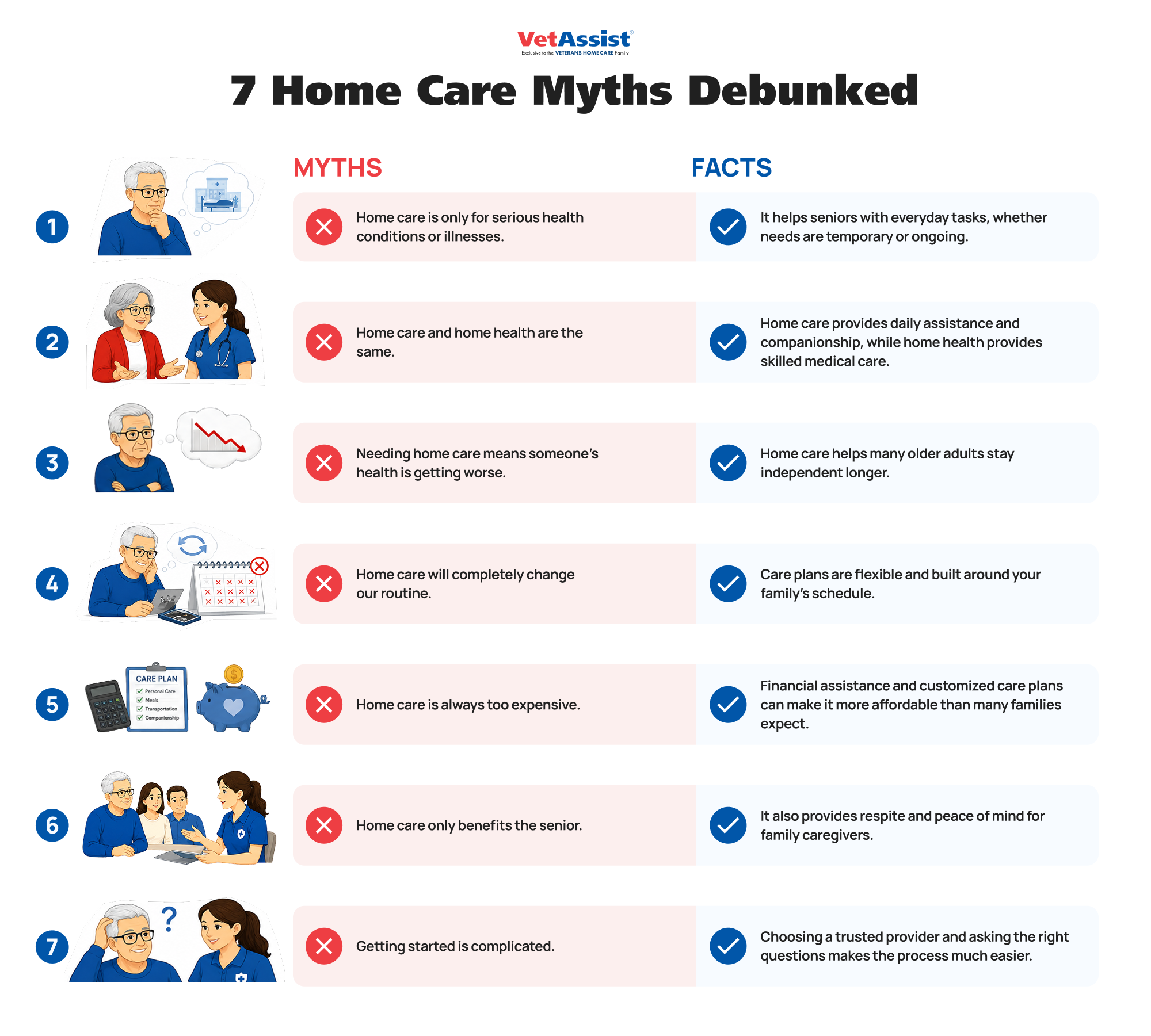
Myth #1: Home care is only for severe health conditions.
Many of us associate home care with intensive diagnoses and perhaps advanced dementia, but the truth is a wide range of individuals benefit from it. Those who live mostly independently can benefit greatly from part-time or temporary home care. For example, home care is often prescribed on a temporary basis for those recently discharged from the hospital; this helps them recover fully and safely and reduces their risk of readmission.
Mostly, home care is for those who need help completing daily activities. They might have mobility issues, problems getting into or out of bed and chairs, challenges preparing meals or completing daily chores, and the like. Again, these needs may be temporary, such as after surgery, or may be the result of chronic conditions that affect everyday life but do not warrant 24/7 care
Myth #2: Home care is the same as home health.
Related to myth #1, a common misconception is that home care is about changing wound dressings, administering medication, and taking vitals. This is the domain of home health, which involves visits from a nurse or other skilled, licensed health professional. Caregivers, on the other hand, will help your loved one bathe, dress, eat meals, and do light housework such as washing dishes, taking out trash, and grocery shopping. They will also remind them to take their medications and drink water, play games/enjoy hobbies, and generally provide warm, attentive companionship that helps maintain cognitive capacities.
Myth #3: Home care is an indicator that things are getting worse
Home care is an important tool for allowing your elderly loved one to live independently and comfortably in their own home for longer. This is overwhelmingly what most American seniors prefer and holds benefits for their mental health through preserving social connections, personal agency, familiarity, and privacy. As such, except in cases of severe medical need, home care means better total wellness outcomes, not worse ones.
Myth #4: Home care will change our lives too much.
There are many ways to begin home care; it is not automatically a full-time change, and families have much more control than they might imagine. For many, a caregiver will begin visiting for a few hours each weekday morning, or for a full day a few times per week. Caregivers slide into existing schedules and routines, making them easier on your loved one and the whole family.
While change can naturally be frightening, the changes in beginning home care are usually both manageable and positive.
Myth #5: Home care is too expensive to consider.
The potential cost of home care can intimidate families away from exploring it as an option. This is where understanding specific care needs and customizing a care plan will help keep costs down. As we’ve mentioned, there is no one-size-fits-all solution for every senior aging in place. Take into consideration chronic health conditions, current capabilities, and their desires for assistance. You can even consult a geriatric care manager for help on defining needs and finding resources.
Common ways families pay for home care include Medicare Advantage plans, Medicaid and its 1915(c) waiver program, PACE, VA programs such as Aid and Attendance, long term care insurance, and private pay (read more about these options here).
Myth #6: Home care is just for the patient/client.
Until you find yourself unexpectedly providing care for a loved one, you have little idea of its huge demands on time, energy, body, and mind. Many in the so-called sandwich generation are finding this out and struggling with caregiver guilt. They worry whether they are doing enough, giving enough, and avoiding critical mistakes, all while balancing caregiving with raising kids, working, and maintaining marriage, friendships, and their own health. We cannot overstate how much this is to carry.
Home care can be a lifeline. Not only does it bring in an extra pair of experienced, trustworthy hands, but it brings a caregiver’s knowledge and moral support. They have seen it all, and their confidence and competence can offer families much-needed hope. Respite is an important part of preventing compassion fatigue, which damages relationships. In this way, caregivers actually serve the whole family.
Myth #7: Home care is difficult to start.
Vetting your care provider is an important step for a successful fit. Some research at the beginning can save headaches later, so consult local reviews and your loved one’s medical office for potential care agencies. Prepare questions, meet your prospective caregivers, and look for experience and qualities that suggest an excellent caregiver (read more about that here). Know exactly what services and length of service you’re signing up for, and do not hesitate to change providers if things are not working out as well as you’d like.
In-home care can be a boon to a senior’s quality of life, allowing them to maintain independence and comfort while increasing the family’s peace of mind. Do not let second-hand myths deter you from exploring this option; there are many great ways to “do” home care!
If your loved one needs home care, our VetAssist mission is to make home care easily and quickly accessible for those who qualify through the VA Pension with Aid and Attendance benefit. Veterans Home Care can help you determine whether you or your loved one will be eligible to receive the benefit, which can cover some or all of the cost of home care, and we make it easy to apply. Chat with us via our website, or call us at (888) 314-6075.

