


Home Modifications for Veterans and Seniors Aging in Place
With more seniors, including millions of aging Veterans, choosing to age in place, families should have a conversation about home safety modifications. Adaptations can be made to each part of the home to prevent falls and compensate for reduced vision, hearing, and mobility.
Our population of American seniors is steadily growing, and consequently, aging-in-place solutions and products are becoming easier to find. Your loved one has more options, and your family can address relevant risks while helping your senior maintain their independence. What follows are some ideas for home modifications focused on preventing accidents and increasing comfort.
Fall Prevention: Stairs, Steps, and Safe Flooring
In the home, falls pose the greatest risk to your elderly loved one’s safety. Falls are responsible for many hospital readmissions, and seniors’ risk of falling increases steadily with age. For homes that have a few steps up to the front door, or between rooms in an open-plan house, consider installing a ramp with handrails. This is especially helpful for seniors who use an assistive device for walking, and is essential for wheelchair use. Another solution to prevent tripping is to add LED lights and/or brightly colored tape to steps, providing more visibility. (Learn more about common age-related vision loss (Learn more about common age-related vision loss here.)
For safer stairways, look at handrails and nonslip surface covers. Remove runners that aren’t totally slip-proof, and add plenty of light, including motion-activated light. If there is a landing, add a chair where your loved one can take a rest partway through.
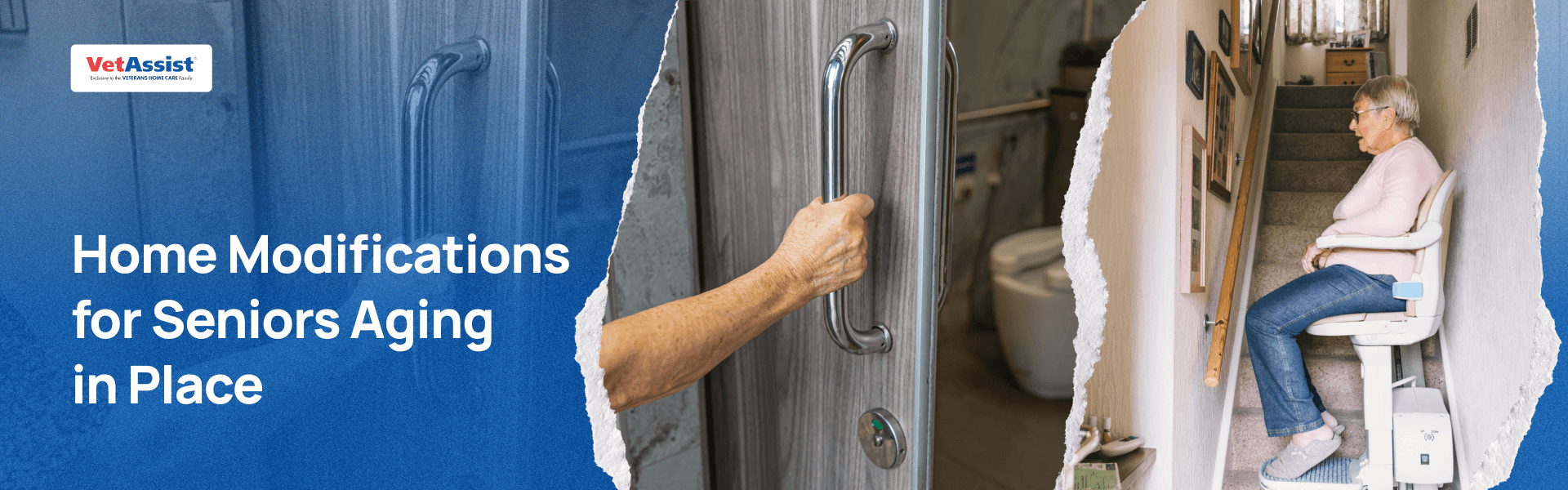
For some seniors, a stairlift may be necessary; ensure they can operate it themselves and that it is properly maintained.
One last tip, and this goes for the entire home: clear clutter! Make sure items (including decorative ones) are not cluttering stairs, floors, doorways, or anywhere else around the home.
Floors and Doors
Some more hazardous types of flooring include high-pile carpet (over half an inch), porcelain tile, marble tile, and old hardwood that has warped or separated. The key is avoiding slippery or uneven surfaces. Where the option is present to choose flooring, choose vinyl, linoleum, rubber, or low-pile carpet. To work with what you have, add low-profile, well-secured mats and rugs to minimize slip risk. Pay special attention to areas that might get wet, such as near sinks or doors leading outside.
Consider widening doorways if your loved one uses a walker or wheelchair. The ADA recommends doorways be 32-48” wide. Doors with swing-clear hinges swing further open than standard hinges. Doors with lever-style handles are also easier to open for those with arthritis, versus twist-knobs.
For doors leading outside, ensure locks work smoothly and that your senior is able to use them comfortably. They may also benefit from a doorbell camera that shows them who is at the door. A side benefit to the door camera is that, for seniors in the early stages of seniors in the early stages of dementia, it can notify loved ones when they have unexpectedly left the house. A front or back door with a keypad can also let you (or a neighbor or caregiver) enter with a code, in the event of an emergency.
Bathroom Modifications for Senior Safety and Accessibility
Most bathrooms are designed with features that can prove hazardous to seniors with reduced vision or mobility, including slick floors and shower-bathtubs that require stepping over. Add plenty of washable rugs to bathroom floors, fixed in place with velcro or grippers. Handles and bars should be added along walls, including in the shower and near the toilet.
Comfort height toilet seats can be purchased that raise seated height so the senior does not have to bend as much. This is a less costly alternative to replacing the toilet.
In the shower, replace the showerhead with a handheld type, and adjust the height so the senior does not have to reach. If layout allows, add a shower stool so the senior can sit.
Light-sensing nightlights can be plugged into outlets in the bathroom and other rooms of the house so that it is never completely dark.
Kitchen Safety Tips to Support Independent Living at Home
As mentioned elsewhere, it is important to minimize trip hazards. Kitchens can be organized thoughtfully so that the senior does minimal (or no) bending down, reaching up, or climbing stepladders. Where possible, replace low cabinets with drawers for easier access to stored items. Pull-down shelves and Lazy Susans can also help with making kitchen items easier to reach. Similar to the doorknobs tip, D-handle cabinet pulls are easier to grip than a rounded knob. Your loved one may also benefit from a grabber that can reach spaces they cannot, such as the top shelf of a pantry.
Regularly check and maintain appliances and plumbing. Induction stoves are safer than gas stoves. Make sure there’s a fire extinguisher, a working smoke alarm, and sprinklers in the kitchen. Check under the sink for any leaks and all over the kitchen for signs of water damage.
If your senior’s refrigerator does not have an alarm, they can be purchased; this helps with preventing the door from being left open, damaging the appliance and its contents. If the fridge has a water dispenser, change the filter regularly. Check in with your loved one on whether they need assistance preparing healthy meals or buying groceries.
Bedroom Comfort and Safety for Aging Seniors
Also check on your senior’s comfort and safety getting into and out of bed. If appropriate, add a bed rail to prevent rolling off the bed during the night. Make sure bedding is warm enough during winter months.
If their bedroom is on the second floor of their home, look at whether it can be moved to the ground floor instead, to lessen their need to climb the stairs.
The bedroom is a common placement for a carbon monoxide alarm. If the home has more than one floor, ensure there is an alarm on each floor. This also applies to smoke alarms.
Smart Home Technology That Helps Seniors Age in Place Safely
Besides doorbell cameras, think about adding a voice assistant that can easily call you to chat—or call emergency services in the event of a household accident. These devices can also help your senior remember to take medications, to drink water, or to go to their appointments.
Smart devices like locks and thermostats can be activated remotely, and smart lights and shades can be put on schedules so that your elderly loved one has one less task to remember at bedtime. Smart leak sensors can be put near the dishwasher, air conditioner, and other appliances to sound the alarm at the first sign of a leak.
According to AARP, 91% of Veterans 45 and older say it’s important for them to stay in their homes if they need long-term care. Aging-in-place technology directly supports that goal. Smart home products are in demand, and new ones are coming out all the time to support a safe home for elderly users.
VA Home Modification Grants That Can Help Veterans Age in Place
Many Veterans are unaware that the VA offers specific grant programs to fund home modifications. In fact, an AARP survey found that 60% of Veterans 45 and older didn’t know VA provides grant funding for home modifications. Here are the key programs to know:
HISA Grant (Home Improvements and Structural Alterations)
The HISA benefit provides financial assistance for medically necessary home modifications — such as installing grab bars, ramps, roll-in showers, or widened doorways. Veterans with service-connected conditions may qualify for up to $6,800, and non-service-connected conditions may qualify for up to $2,000. A VA physician prescription is required. This is one of the most accessible grant options for aging Veterans who need home safety upgrades.
SAH and SHA Grants
The Specially Adapted Housing (SAH) grant and Special Housing Adaptation (SHA) grant are available to Veterans with more significant service-connected disabilities. For FY 2025, SAH grants can reach up to $121,812, while SHA grants offer up to $22,036 for adaptations such as ramps, doorway modifications, and accessible bathrooms.
Aid and Attendance Benefit
Beyond physical modifications, Veterans who need help with daily activities may qualify for the VA Pension with Aid and Attendance benefit — which can provide monthly, tax-free income to help cover the cost of in-home care. Veterans Home Care’s VetAssist® Program helps Veterans and their families check eligibility and navigate the application process at no cost.
Talking to Your Senior about Home Safety Modifications
It can sometimes be difficult to broach the subject of these modifications with an aging parent, as they might not see the need for such measures. Be sure to hear their concerns and let them understand what you see as the benefits of these modifications. Be wary of doing too much too soon, and if they are open to it, bring in an occupational therapist who can not only advise on household adaptations, but also on lifestyle and habits for continued independent living.
If your loved one needs home care, our VetAssist mission is to make home care easily and quickly accessible for those who qualify through the VA Pension with Aid and Attendance benefit. Veterans Home Care can help you determine whether you or your loved one will be eligible to receive the benefit, which can cover some or all of the cost of home care, and we make it easy to apply. Chat with us via our website, or call us at (888) 314-6075.

