


Emergency Preparedness for Seniors Living Alone
As we head into the Atlantic hurricane season, this may be the right time to review emergency preparedness for older adults who live alone. Many households may not know how to prepare for a disaster such as a hurricane, winter storm, tornado, flash flood, or earthquake, though most of the US is at occasional risk of one or more of these. The key is not to panic, but to have an emergency preparedness plan that includes an emergency kit, important contact information, and an idea of what to do (or not to do) in the first few days after a disaster.
Let’s review the essentials. Be sure to check in on your senior loved ones to make sure they’re prepared!
Basic Items in an Emergency Kit
The purpose of an emergency kit is to provide for basic needs when the power or water goes out and travel is not possible. It also plans for safety through communication and evacuation. A reliable emergency kit plans for at least 3-5 days and includes the following:
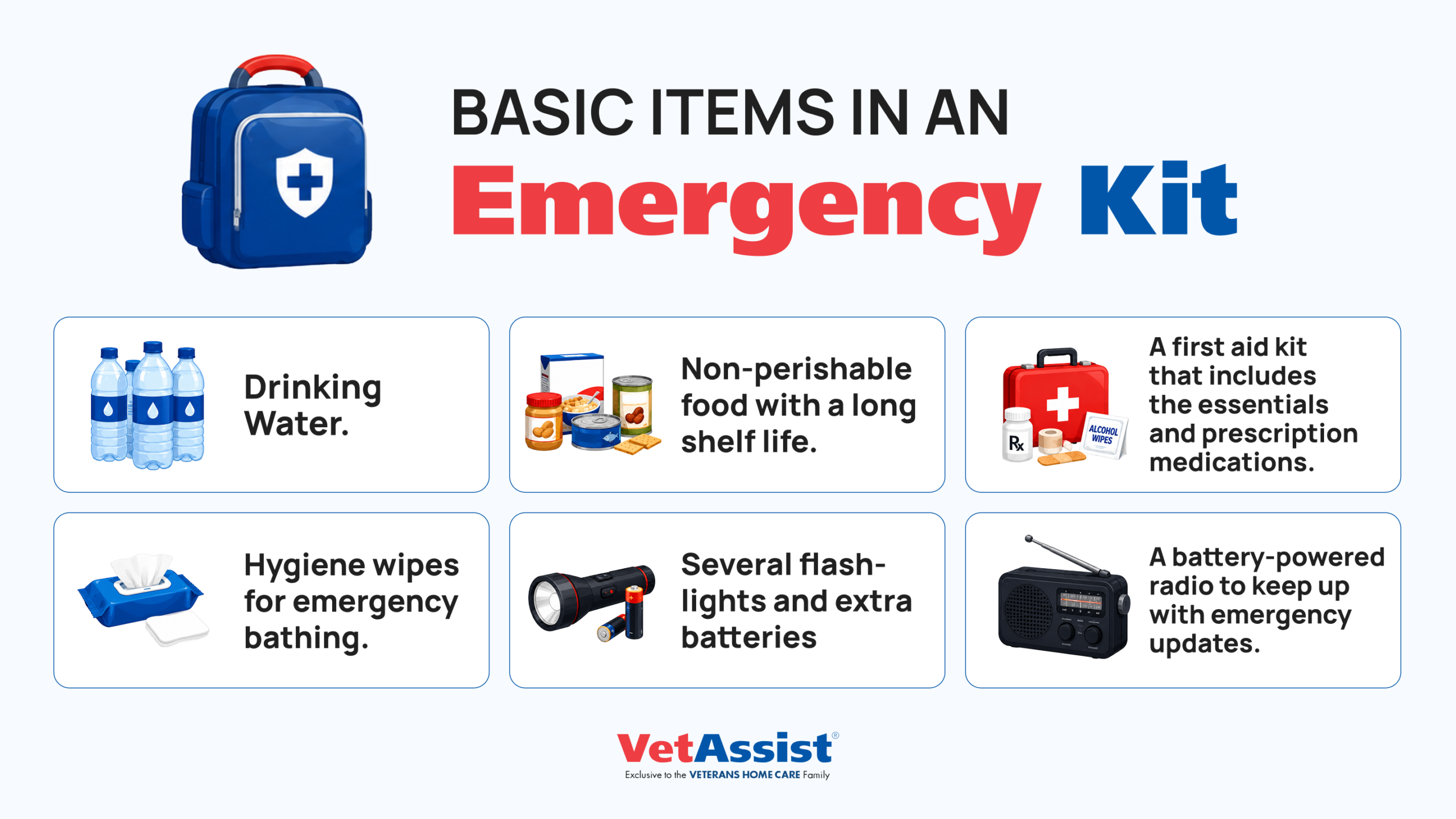
- Drinking water. Your kit should include one gallon per person per day for drinking, brushing teeth, and similar uses where it might be ingested.
- Non-perishable food with a long shelf life. Make sure canned foods have a pop tab to avoid using a can opener (though the latter is fine if your senior can easily use it). Some ideas are cooked beans, canned chicken or tuna, cereal or granola, cooked rice or pasta, peanut butter, boxed milk, nuts, and crackers. Be sure to stick to foods your senior normally eats and which provide needed nutrition.
- A first aid kit that includes the essentials (bandages, alcohol wipes, antibiotic cream, over-the-counter pain relievers, etc.) and prescription medications (see our notes below).
- Hygiene wipes for emergency bathing.
- Garbage bags and disinfecting wipes for surfaces.
- Several flashlights and extra batteries.
- A battery-powered radio to keep up with emergency updates.
- A power bank for cell phones. While cell phone service may or may not be available, a power bank is important for keeping it usable.
- A wrench and pair of pliers to safely turn off utilities, if needed, and a pair of multipurpose scissors.
- Cash in small bills, in case electronic payments are down. This and any other paper or easily-damaged items should be placed in waterproof containers.
- Important personal documents like passports and insurance policies.
- Maps of your area.
- A list of important contacts (discussed below).
A basic kit may also include a whistle for attracting attention and a mask for filtering excessive dust. If there are pets, be sure to plan for them too! And being in a disaster situation can be both stressful and boring, so books, puzzles, and simple crafts are nice to include.
Special Considerations in an Emergency Kit for Elderly Adults
Most older adults are managing several chronic conditions with prescription medication, so disaster prep for seniors must take this into account. It is critical that your senior loved one not miss a dose of their prescribed medications. This may mean staying on top of refill schedules to prevent the chance of a gap, where pharmacies might be closed or roads are covered in downed trees. Also consider whether your loved one takes any medication that needs refrigeration; this may require getting a battery-powered cooler or something similar to safely store it.
If your senior wears a hearing aid or uses a powered assistive device for walking or breathing, think about options for powering these as well. Further, think about their needs for heating or cooling with battery-powered fans (more here about heat safety) and appropriate clothing and blankets.
As mentioned, their kit needs a list of important contacts, which should include:
- Local emergency and non-emergency numbers. Beyond 911, this includes non-emergency police and fire, nearby urgent care centers, and management/maintenance (if your loved one lives in a managed community).
- Phone numbers and addresses for nearby storm shelters.
- One or more family members or friends who serve as an emergency contact during normal circumstances (for example, on medical office intake).
- One or more neighbors.
- One contact who lives outside your area, who is less likely to be affected by the same disaster.
- Your loved one’s primary care physician and usual pharmacy.
- Your loved one’s home care or home health provider, if applicable.
Note that a contact list like this is great to post on the fridge or near a landline phone, as well as in your emergency kit.
How to Prepare Seniors for Emergency Circumstances
The best approach for an unpredictable natural disaster is to plan ahead of time. In cases where you are not able to be together, talk to your senior loved one about a communication plan, such as a cadence for staying in touch at set times throughout the day, or even a phone chain. Consider turning on location-sharing on cell phones or other devices that support it.
For disasters such as hurricanes and winter storms, where there is forewarning, talk about options and preferences for evacuation. If staying put, review the list of preparations on weather.gov or another reliable website.
A common risk for seniors who live alone is falling. In emergency situations, they may not be able to get help quickly, so preventing falls is crucial. Besides the usual prevention, talk to them about not taking risks outdoors after powerlines or tree limbs have fallen, or ice has covered sidewalks.
Some of us are prone to panic, while others are unlikely to worry enough about emergencies. Help your senior loved one strike a balance by being well-prepared to secure peace of mind.
If your loved one needs home care, our VetAssist mission is to make home care easily and quickly accessible for those who qualify through the VA Pension with Aid and Attendance benefit. Veterans Home Care can help you determine whether you or your loved one will be eligible to receive the benefit, which can cover some or all of the cost of home care, and we make it easy to apply. Chat with us via our website, or call us at (888) 314-6075.

