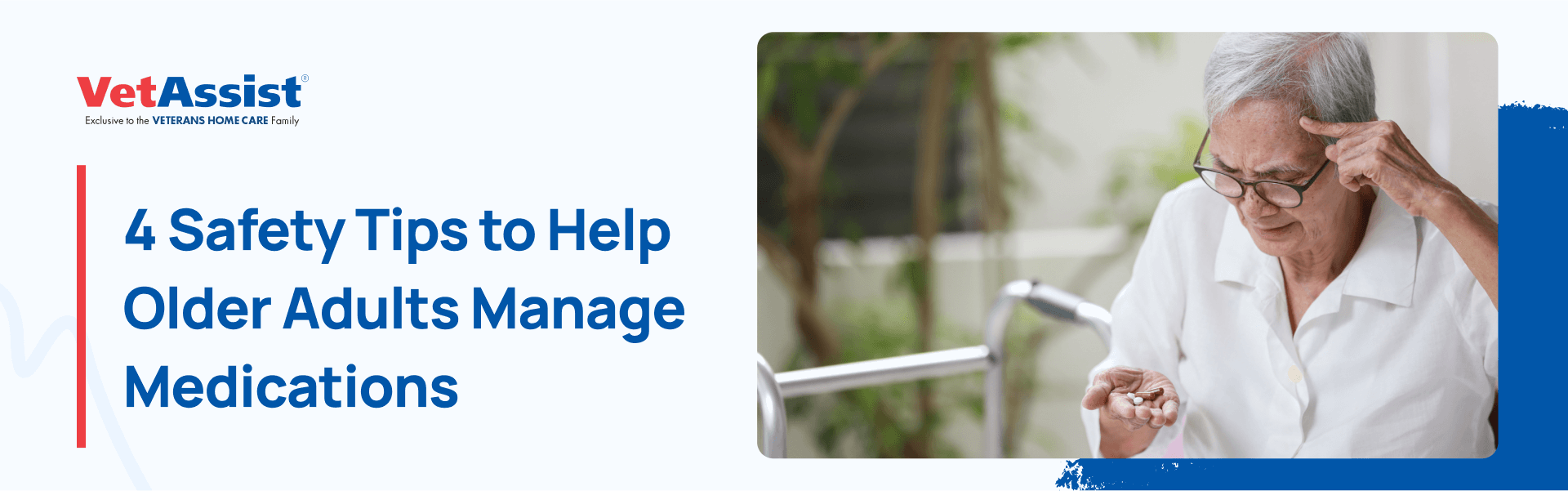

4 Safety Tips to Help Older Adults Manage Medications
The vast majority of Americans over age 60 manage at least one chronic health condition, and medication is often a key part of management. The CDC reports that nearly 9 in 10 seniors regularly take at least one prescription medication, with many taking two or more. Add in over-the-counter (OTC) meds, and this presents a challenge in how to help elderly loved ones remember and safely manage their medications.
While professional caregivers cannot prescribe or administer medications, they can help with medication management to help prevent negative health impacts from forgetting, forgoing, or mixing the wrong meds. Family caregivers can also learn easy modifications and routines for elderly medication management. The following are some ideas to help with medication safety; be sure to also speak with your loved one’s primary care doctor, geriatrician, or geriatric care manager for specific guidance.
-
Don’t skip medications prescribed by your doctor.
It is a sad reality that some seniors cannot comfortably afford all of their medications. AARP reports that between 20-25% of seniors have missed taking their medications as prescribed due to financial hardship, skipping or reducing doses. Others will go without other necessities in order to pay for their prescriptions and refills. This often happens when the senior is not insured, is underinsured, or is prescribed medications not covered by insurance.
Skipping important medications can be hazardous to one’s health, so talk to your senior loved one about their current total cost of meds—prescription and OTC—to find and address gaps in their ability to take what they need. Their doctor may be able to prescribe a lower-cost alternative or generic, or there may be untapped resources available to cover some or all of the cost.
Lastly, some seniors miss medications because natural disasters like hurricanes, floods, or blizzards have temporarily shut down their pharmacy. Be sure to order refills well ahead of these extenuating circumstances.
-
Use simple but reliable medication management tools.
A good starting point for safe medication administration is to make simple changes around the medication schedule.
- Put all medications together in a place where the senior spends time every day, such as the kitchen or by a favorite armchair. Note that some medications must be refrigerated, and they should all be kept safe from heat and moisture.
- Use a daily pill organizer, filling it on the same day every week. (This is a task where the senior may be assisted by their caregiver.)
- Create a chart or checklist that lists times to take medications. Share this with any professional or family caregiver that will spend time with your loved one.
-
Technology is also a medication management tool.
Digital reminders can be an easy way to ensure your senior loved one remembers to take their medications. Devices such as SmartCompanion can be programmed to prompt your loved one (with a friendly, AI-powered voice) to take their meds several times per day, as needed. You can also program reminders for drinking water, eating meals/snacks, and other daily routines related to health and safety.
For those seniors comfortable on a smartphone, health apps and digital files can be used for medication tracking (see below).
-
Talk to your doctor and pharmacist about side effects and interactions.
Some common medications for senior citizens can interact with each other or with certain foods or drinks, leading to adverse effects. Consequently, it’s important to let your loved one’s doctor know of everything you are already taking—including supplements and OTC drugs. You can also ask the pharmacist about interactions when picking up new prescriptions or refills.
Medications sometimes carry side effects such as nausea, loss of appetite, dizziness, and others, which can range from mild to severe. Make sure you and your elderly loved one are aware of these, and check in often to see if they develop.
There are also free online medication safety tools through sites like WebMD, Drugs.com, RxList, and others, where you can read about drug interactions and side effects.
Lastly, it’s good practice to keep a medication tracker with name, dosage, frequency, and condition being treated. This can be given to medical staff during intake and appointments to help document every medication (and supplement) that the senior is taking.
With some simple routines and helpful medication management tools for older adults, you can better ensure your loved one is taking their prescription and OTC meds as directed, and your healthcare professionals can have the best information for their care plan. If your loved one needs home care, our VetAssist mission is to make home care easily and quickly accessible for those who qualify through the VA Pension with Aid and Attendance benefit. Veterans Home Care can help you determine whether you or your loved one will be eligible to receive the benefit, which can cover some or all of the cost of home care, and we make it easy to apply. Chat with us via our website, or call us at (888) 314-6075.