



Caregiver Tips for Doctor Visits
Supporting an aging loved one’s health means learning a level of medical advocacy most of us were not trained for. Many individuals find that attending doctor appointments with their elderly parent brings unforeseen needs. The following is our guide for better preparation, advocacy, and making the most of your loved one’s doctor visit.
Before the Appointment
To prepare for the appointment, focus on gathering information. 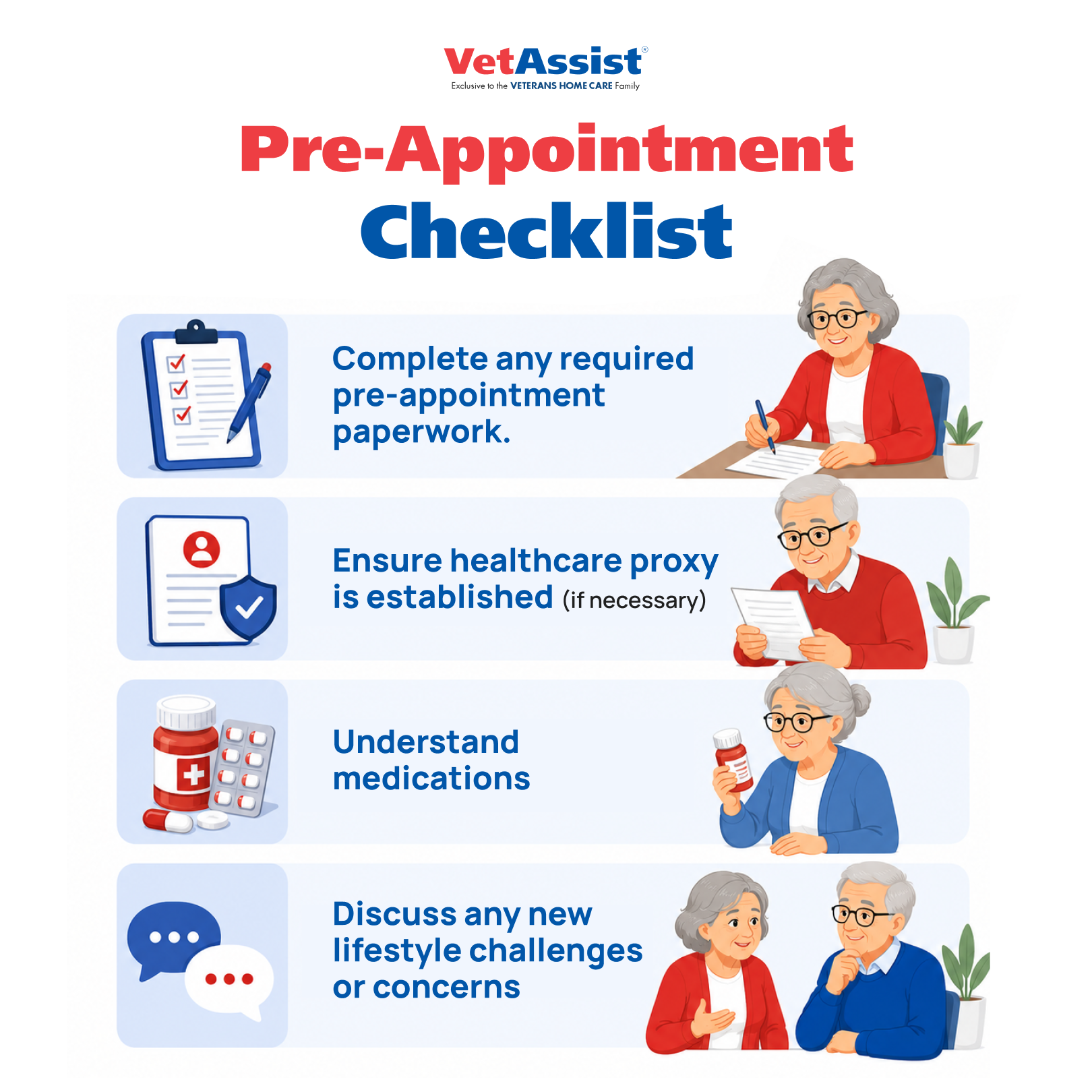
- Does your loved one’s medical office require completion of paperwork ahead of time? Even if they don’t, completing it at home—in a comfortable, calm environment, with lots of time—works to your advantage. (Ask the office if this is an option.) Completing the paperwork with your parent or loved one gives you the chance to fill out health history and related details you may not even know.
- Find out if your senior loved one has named a healthcare proxy or filled out a release of information with your name on it. If you can’t find it, call the office and ask. It’s important to have your loved one sign off on your ability to speak for them if needed, as well as receive information about their condition and care.
- Interview your parent or loved one on the medications they are taking, and how faithfully they are taking them according to prescription. Ask about any side effects and recent changes they have noticed.
- Likewise, find out about any new lifestyle challenges, such as difficulty walking or getting in or out of bed. Ask whether they are eating regularly and drinking water, if they are socializing, and if they are struggling with any household chores. Be alert for signs of negative mood or anxiety, as this can be helpful for their doctor to keep tabs on their mental health.
What to bring to a doctor’s appointment: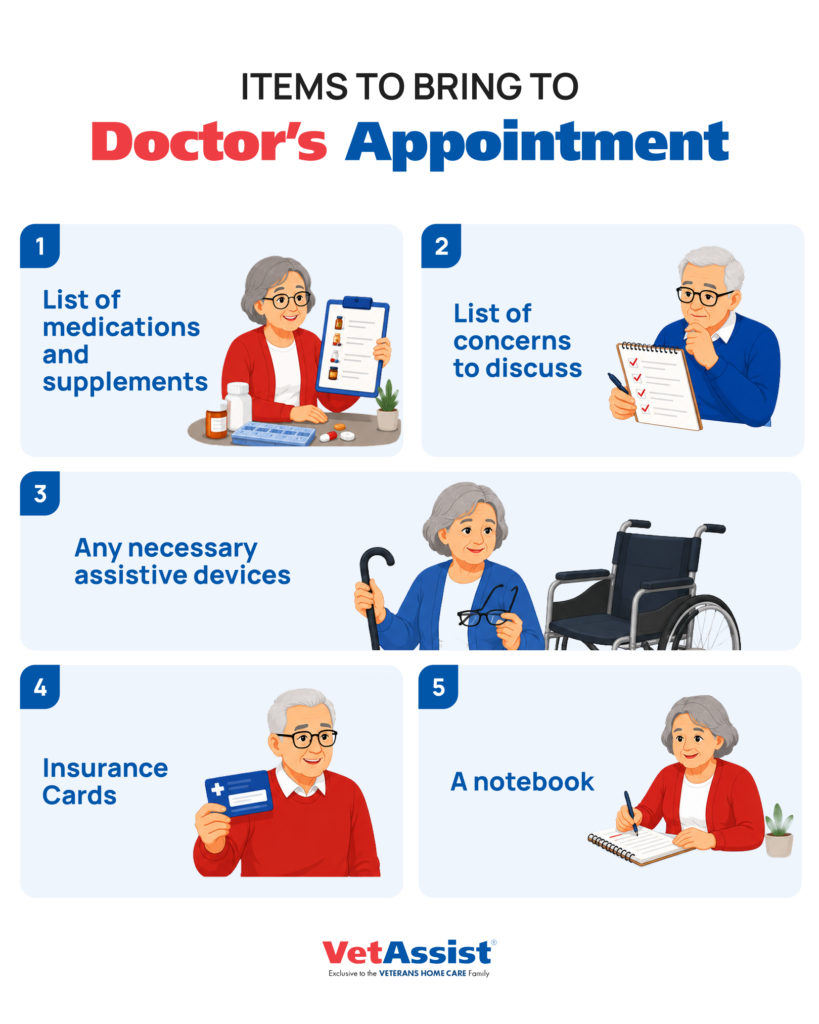
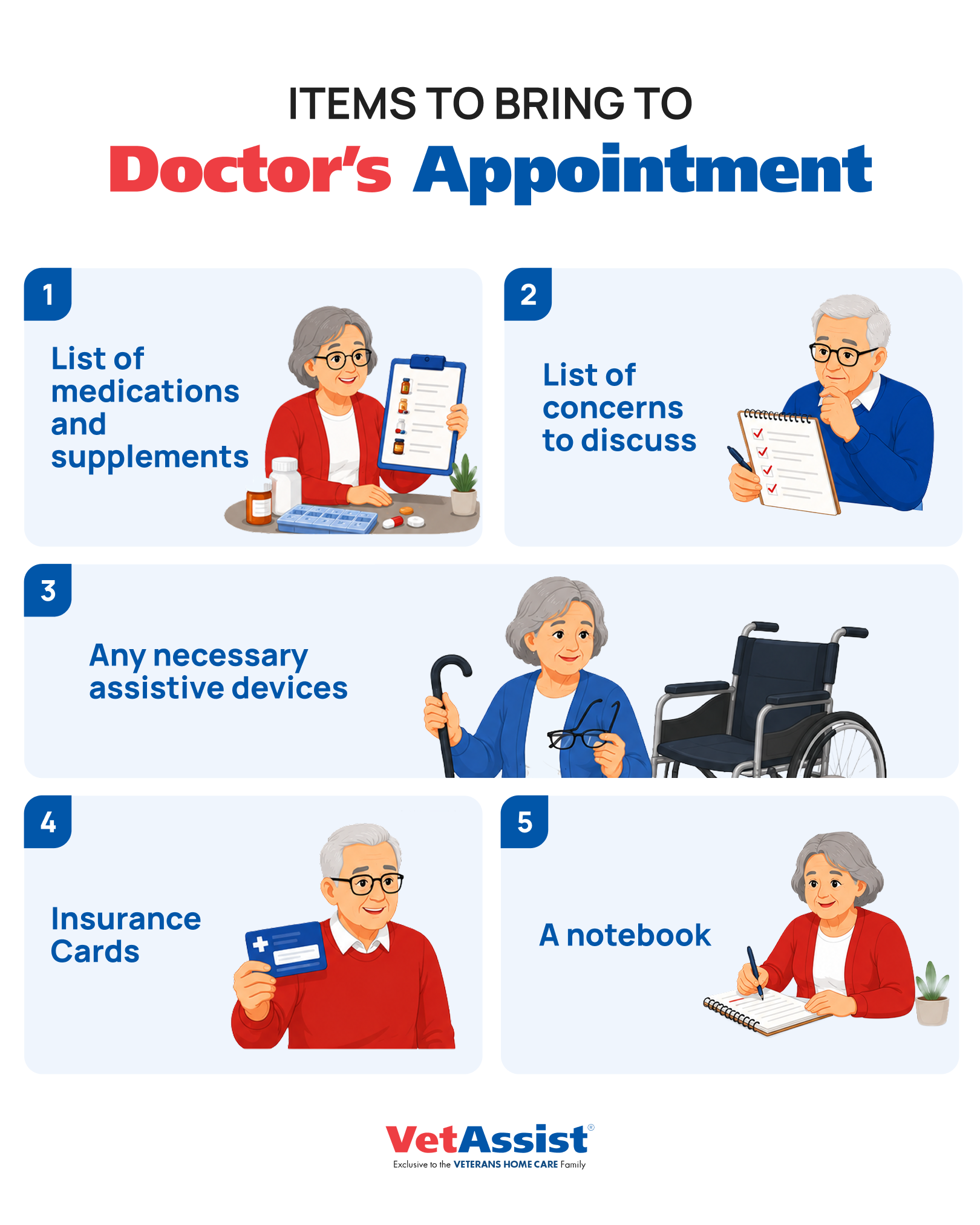
- A list of medications and supplements your loved one is taking. Bringing the actual bottles/packaging is even better, as the doctor can review labels.
- A list of concerns you’d like the doctor to address. Besides known conditions and symptoms, this is a good time to ask about concerns like dementia screening, assistive devices for walking, eyesight changes, and occupational therapy Keep the list to your most pressing concerns.
- Their glasses, hearing aid, walking device, or similar implements.
- Insurance cards and information of any other healthcare providers that they see.
- Something to take notes as you are communicating with medical staff. There is no way to simply remember everything that was said, and these face-to-face opportunities provide vital information.
Lastly, but very importantly, have a conversation with your loved one regarding speaking up for them during their appointment. Are they alright with you chiming in when needed? Do they prefer you take the lead? Let them know you want to help, but be aware it can be embarrassing for some elderly parents to be contradicted or talked over in front of the doctor. Talking about boundaries ahead of time is effective caregiver communication; emphasize your intent to help to your fullest capability, and empower them to take the lead if they can.
During and After the Appointment
During a senior medical visit, remain alert to your loved one’s emotional state, energy level, and attention. Long wait times and shuttling between rooms can cause fatigue, which in turn can discourage your loved one from speaking up and asking their questions. Do what you can to ensure you both dress warmly and comfortably, eat beforehand, and set yourself up to stay resilient.
If your loved one asks you to leave the room, do so. Try not to talk over them or make them feel invisible, even if you’re trying to help. Listen attentively, take notes, and ask the medical staff for any literature or resources related to your loved one’s health conditions.
After the appointment, write up any instructions from the doctor in an easy-to-read format, and place it in a highly visible place like the kitchen counter. Give your loved one your notes from the appointment. Follow up on further appointments to be scheduled, prescriptions to be picked up, or tests to be completed. If your loved one is comfortable with it, you may want to get the login for their patient portal to see test results or notes from their clinic. You can usually also send messages to their doctor through the portal (though you should never impersonate your parent/loved one).
Other Considerations
Certain healthcare and social services professionals are highly trained in coordinating senior care. These include geriatricians, who specialize in patients over 65 years of age, and geriatric care managers, who are an excellent resource for elderly patients with complex care needs. Social workers are also available at most hospitals to provide medical advocacy for seniors and education to their families.
If your parent speaks a different language than their doctor, an interpreter may be available to help with communication. This can bridge the gap without putting too much emphasis on the adult child to do all of the communication.
For some families, agreement on a care plan or its details may be hard to come by. Caregivers with siblings might need to find ways to make joint decisions peacefully, or else get their siblings’ blessing to act more unilaterally (though this comes with the tradeoff of taking on the bulk of caregiving duties).
If at some point, your elderly loved one needs more assistance than a family caregiver can provide—especially for routine, everyday activities—you may want to review your home care options. Our VetAssist mission is to make home care easily and quickly accessible for those who qualify through the VA Pension with Aid and Attendance benefit. Veterans Home Care can help you determine whether you or your loved one will be eligible to receive the benefit, which can cover some or all of the cost of home care, and we make it easy to apply. Chat with us via our website, or call us at (888) 314-6075.

