


Hearing Loss in Seniors: Causes, Risks, and Prevention
Age-related hearing loss is common, but it carries consequences we don’t often take seriously enough. Hearing-related ailments pose a threat to safety and emotional wellbeing, and they can even be a sign of developing cognitive health problems.
Here, we discuss types and causes of hearing loss in elderly adults, risks and signs, and how to prevent and treat hearing loss in old age. (On a similar note, be sure to check out our blog on age-related vision loss.)
What Causes Deafness in Old Age?
Hearing loss can manifest in different ways. Most hearing loss is gradual, which makes it hard to notice until it has become an obstacle in daily life.
Presbycusis (prez-beh-KYOO-sis) is the medical term for age-related hearing loss that affects around one in three American adults ages 65-75 (and even more over age 75). This condition develops over time because of lifetime exposure to loud noise (similar to how lifetime sun exposure can increase the risk of skin cancer), age-related changes in the inner or middle ear, damage to nerve pathways between the ear and brain, and sometimes genetics. Presbycusis typically affects both ears.
Sometimes, hearing loss is caused by treatable factors, such as a buildup of earwax or a sinus infection. Swift medical attention can prevent these from becoming more serious. Hearing can also be damaged by common elderly ailments such as hypertension and diabetes, as well as by medical treatment such as chemotherapy or certain antibiotics.
Less common is sudden hearing loss, which indicates a more complex problem with organs within the ear. This often occurs over just a few days and usually affects only one ear. While this is more common among middle aged adults, it can happen in seniors as well. In any case, it should be given immediate medical attention to prevent permanent hearing loss.
Of course, hearing loss can also be caused by accidents that rupture the eardrum. This is one important reason it is not recommended to use cotton swabs to clean the inner ear. A ruptured eardrum is painful and typically accompanied by blood or fluid.
Why You Should Take Early Action on Hearing Loss
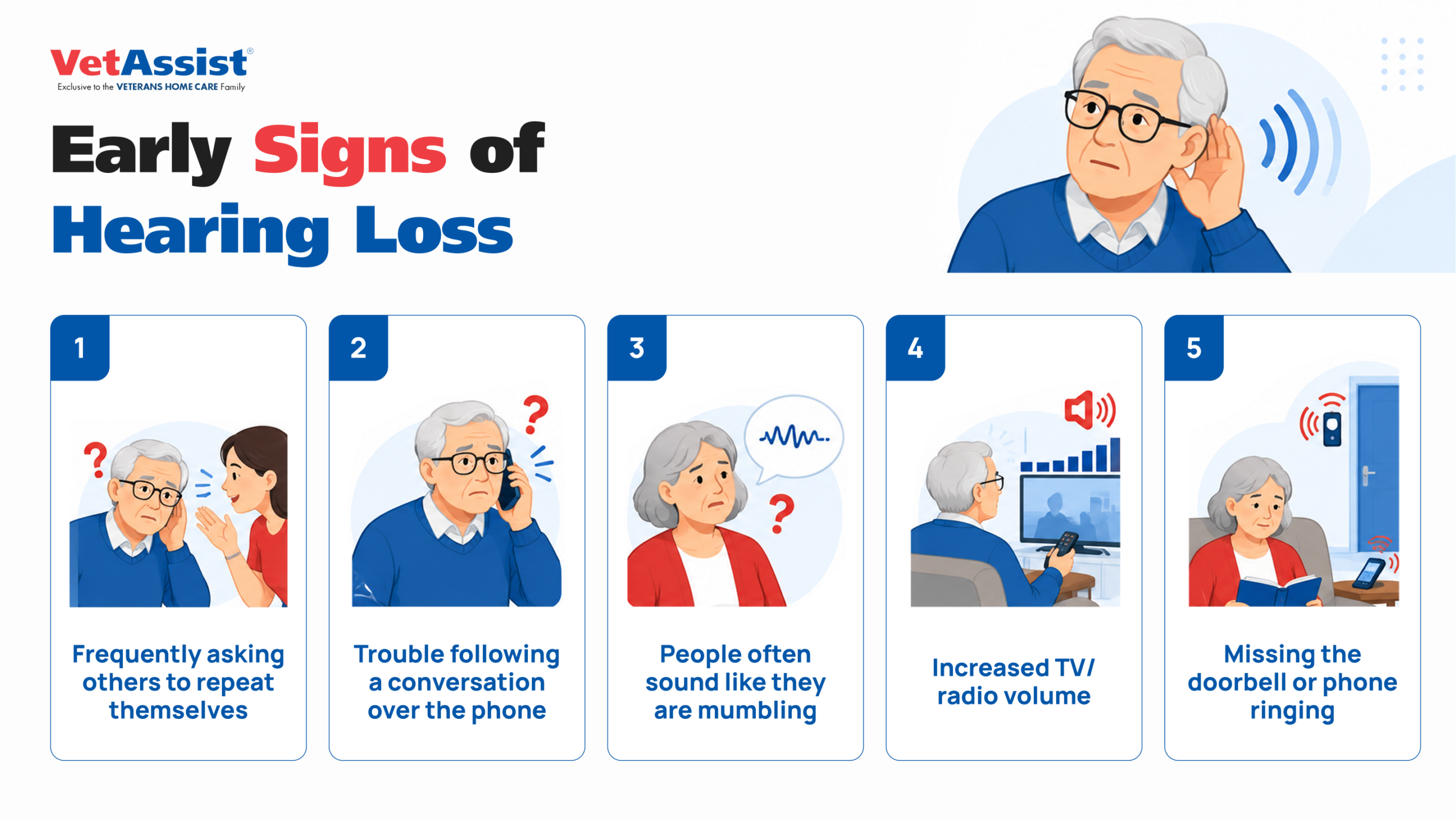
We may miss early signs that we are losing our hearing, resulting in lost time to address the issue. Some things to look out for:
● Do you find yourself asking others to repeat themselves, especially in crowded settings? Is this causing frustration for you or others?
● Do you have trouble following a conversation over the phone?
● Does it often sound like people are mumbling?
● Are you setting the TV/radio volume at a higher level than you used to? Or do others complain about the TV/radio being very loud?
● Do you sometimes or often miss the doorbell or phone ringing?
Tinnitus can also be an early sign of hearing loss. While most tinnitus sounds like high pitched ringing in the ears, it can also sound like hissing, static, or roaring. It can appear and disappear suddenly.
Hearing loss presents a safety hazard because of the decreased awareness of alarms—not just smoke alarms, but car horns, oven timers, weather sirens, and the like. Seniors with hearing loss are at a greater risk of car accidents and falls. It also decreases their ability to follow legal or medical conversations, putting them at greater risk for lapsed care, misunderstandings, or even scams.
It surprises many to learn that hearing loss is strongly associated with cognitive and emotional decline. The increased difficulty in holding conversations can lead to degraded relationships with family and friends, leading to shame and isolation. Companionship is critically important for seniors to maintain their cognitive abilities—flexing memory and concentration, among other functions—and to maintain a positive mood and feelings of connection and purpose. The loss of hearing in old age is correlated with developing dementia, which is why a doctor evaluating cognitive health will often ask about hearing difficulties.
Prevention and Treatment of Elderly Hearing Loss
Hearing loss cannot be reversed, so prevention is key. While we cannot change the past, we can work on prevention today by protecting our ears from loud noises. This includes wearing earplugs around lawnmowers, power tools, fireworks, motorcycles, and loud concerts or sporting events. Turn music and TV volumes down to the lowest level where you can still enjoy them. Be mindful of headphone volumes, as well.
Talk to your doctor about any tinnitus or changes to hearing, such as muffled sounds, echoes, or distortion. Discuss pain or pressure in sinuses and inner ear, or incidents where you think fluid may have gotten in your ears (such as while swimming). A hearing test should also become part of annual check-ups, especially if you see a geriatrician.
A primary care provider may refer you to an ear, nose, and throat doctor (otolaryngologist) if more specialized care is needed. A further hearing specialist, an audiologist, can diagnose the exact nature of the hearing loss and discuss options like hearing aids (which are now widely available over-the-counter for mild hearing problems) and cochlear implants.
Thanks to talk-to-text technologies, software and accessories now exist that can type out speech so it can be read. This might help some individuals with phone calls or other situations where voices are muffled/garbled.
Hearing loss is common in advanced years and nothing to be embarrassed about. Too many seniors pretend they are following a conversation so as not to “make a fuss” by asking people to repeat themselves. While it may be difficult, talk to your loved ones about your hearing challenges so they can adjust your environment for easier communication (for example, moving to a quieter room to talk) and support you in seeking care. And if you suspect your loved one is facing hearing challenges, share the above information with them and create a judgment-free space for them to discuss their struggle, which can feel scary but actually has lots of solutions to improve quality of life.
If your loved one needs home care, our VetAssist mission is to make home care easily and quickly accessible for those who qualify through the VA Pension with Aid and Attendance benefit. Veterans Home Care can help you determine whether you or your loved one will be eligible to receive the benefit, which can cover some or all of the cost of home care, and we make it easy to apply. Chat with us via our website, or call us at (888) 314-6075.

